Ladies and gentlemen, I have a confession: I am a procrastinator. I know many of you suffer from this condition as well. In light of this, I want to tell you about how recent developments in AI have partially alleviated my procrastination in the hopes that they may be able to help some of you too.
Specifically, knowing how easy it is to use AI tools has lowered the activation energy it takes to make myself start working. I am borrowing this concept from chemistry, where it takes a certain amount of extra energy for the components of a reaction to move through any intermediate states and form products. Generally, I procrastinate because I am happy doing whatever I want and don’t want to leave that state even if the results are worth it. Doing the work usually isn’t that unpleasant and I am happier once it is over; it’s just getting over the hump of the transition from non-work to work that I have a hard time doing. At least until the deadline gets uncomfortably close and last-minute panic gives me enough energy to make it over the hump and do the task at hand.
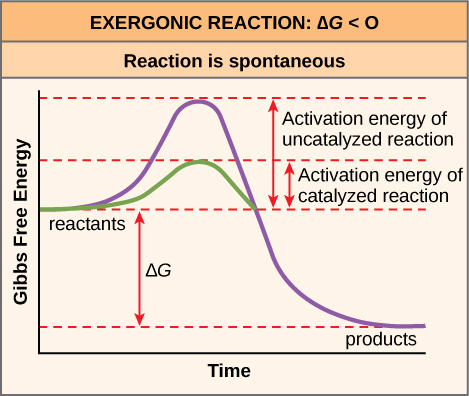
In that sense, AI acts as a catalyst by lessening the amount of effort it takes to go from not working to working. Before the mid-2020s, I could have a rough idea of what I want to do, but I would be unsure of the next steps. All the while, I would stew in the knowledge that I had lots of work ahead. Now, I can just type that rough idea into a chat interface and get all sorts of feedback, prototypes, and other next steps which I can iterate on by just responding with my further thoughts on the new material.
For example: I always wanted to create my own website with exactly the features I liked. I could have just used a site from a template, but I wanted to be able to change things in whatever way I wanted. However, I knew it would be a lot of work to do this, and while it would be a really cool set of skills to have, I just kept putting off learning them. Fast forward to A.D. 2026: one day I realized that all I had to do was type out a rough sketch of what I wanted my site to be like and I could get a working version of it in very little time. Any questions I had along the way about domain registration, web hosting, graphic design, etc. could be answered easily without consulting dense guides or scrounging through forums.
Like any catalyst, AI lowers the activation energy to do some things more than others. Designing a customized personal website becomes a lot easier, as well as a variety of other tasks like creating presentation outlines or answering niche questions. You can get some of the way on other things, like coming up with healthy meal ideas aligned to your preferences, but they can’t actually make the meals for you1. However, the limits are more porous than you might think. I was going to use workout planning as an example of where AI can’t physically train you yet, but there’s definitely a way to set up an AI coach using some text-to-speech and speech-to-text converter paired with a video feed of yourself doing various exercises alongside any biometrics you can record. I’m selling myself on this idea the more I think about it actually; Claude would be a great gym buddy2.
Anyway, LLM gym-bro fantasies aside, lowering the amount of energy you think it will take to do something may help you actually start doing that thing, especially if it is a task with no deadlines that you can otherwise easily put off. In my case, using AI was what helped me internalize that accomplishing my goals could be easier than I thought, but other approaches probably help achieve this same core insight. And lest you think this has fully worked, there are still a lot of things I want to work on (diet and exercise foremost among these), so I’m writing this as much to convince myself as any of you.